
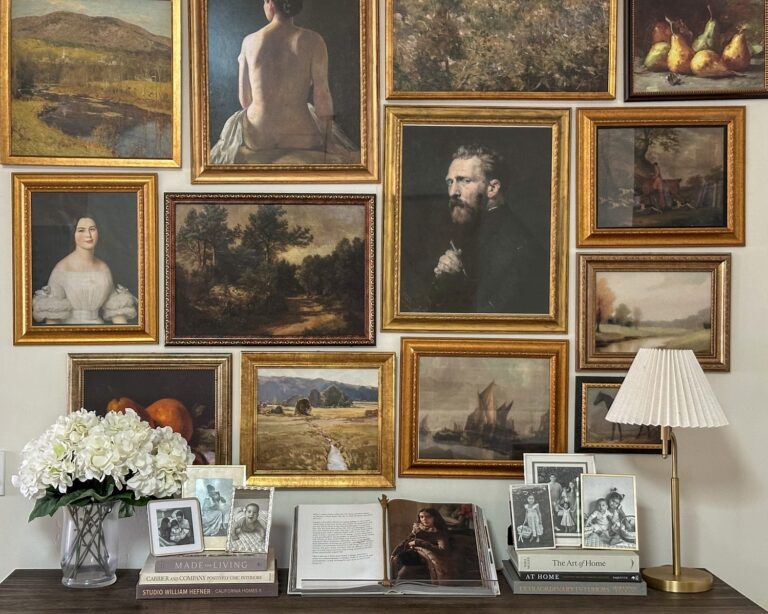
The Collected Gallery Wall: How To Make Your Art Look Curated, Not Coordinated
Design & Styling The Collected Gallery Wall: How To Make Your Art Look Curated, Not Coordinated By Liz Lovery · Updated August 24, 2026 The


Budgeting a home renovation isn’t about being precise — it’s about being prepared. After four full renovations, here’s the framework I use every time, the three categories that catch most people off guard, and the contingency rule we will never break again.
There’s almost always one wall in a home that doesn’t quite know what it wants to be. Too big to leave blank, too awkward for a gallery wall, too central to ignore. That’s the wall that’s asking for an accent treatment — and turning it into a focal point is one of the highest-impact, lowest-cost design moves you can make in a room.
I’ve been renovating homes for years now — our 1956 California rancher, a duplex we converted into a triplex, the Paisley project, the 1930s Adobe — and accent walls have shown up in almost every one of them. Some have been simple paint treatments. Some have been full custom builds (our floor-to-ceiling library wall comes to mind). Some have been weekend DIYs we knocked out during a nap window.
What follows is fifteen of my favorite directions to take an accent wall — from the very approachable (paint one wall, no tools required) to the more involved (custom paneling, wood slats, a built-in library). I’ve grouped them roughly from easiest to most ambitious so you can find one that matches your skill level, your budget, and the four hours of free time you actually have this weekend.
A note before you scroll. The single most common mistake I see with accent walls is choosing the wrong wall. The accent wall should be the one your eye naturally lands on when you walk into the room — usually the wall behind the bed, the wall behind the couch, or the wall directly opposite the entry. If you pick a side wall or a wall the room doesn’t face, the treatment fights the room instead of anchoring it. Pick the focal wall first, then pick the treatment.
Board and batten is the accent treatment I recommend most often, and it’s the one I’d call the safest bet in this whole list. It’s a series of vertical (or horizontal) wood strips — battens — applied over a flat painted base. The look is timeless, it photographs beautifully, and it works in almost every style of home, from traditional to modern farmhouse to coastal.
What I love about it: the materials are inexpensive (pre-primed MDF strips run a few dollars each at the hardware store), the cuts are simple straight lines, and the visual payoff is enormous. Most people can complete a single accent wall in a weekend with a level, a brad nailer, caulk, and paint.
Where it works best. Behind a bed, in a dining room, in a nursery, or as a half-wall treatment in a hallway. If you’re in a builder-grade home that feels generic, this one trick adds more architectural character than almost anything else you could do for the same budget.
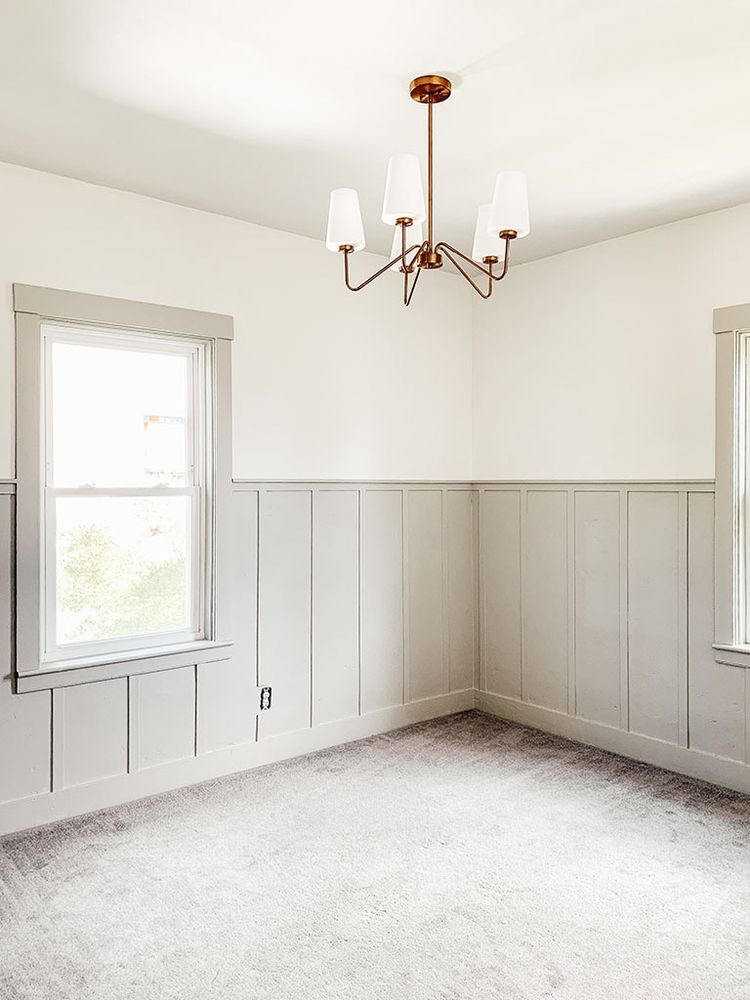
Image Credits: Michaela Diane Designs
If board and batten is the safe bet, geometric wood trim is its more dramatic cousin. Instead of evenly-spaced vertical strips, you’re laying out diagonals, X-patterns, or asymmetric grids — the result is more sculptural, more graphic, and a lot more bold.
The version pictured here is one I’ve recreated in a few clients’ homes: dark moody paint behind diagonal trim that breaks the wall into a few large, irregular panels. Paired with brass hardware and warm wood, it reads as elevated and a little unexpected. It’s a great choice for an entryway, an office, or a powder room — somewhere a little drama is welcome.
Difficulty. Moderate. Cuts are angled, so you’ll want a miter saw. Plan the layout on paper first, tape it out on the wall before you commit, and build outward from a center point.
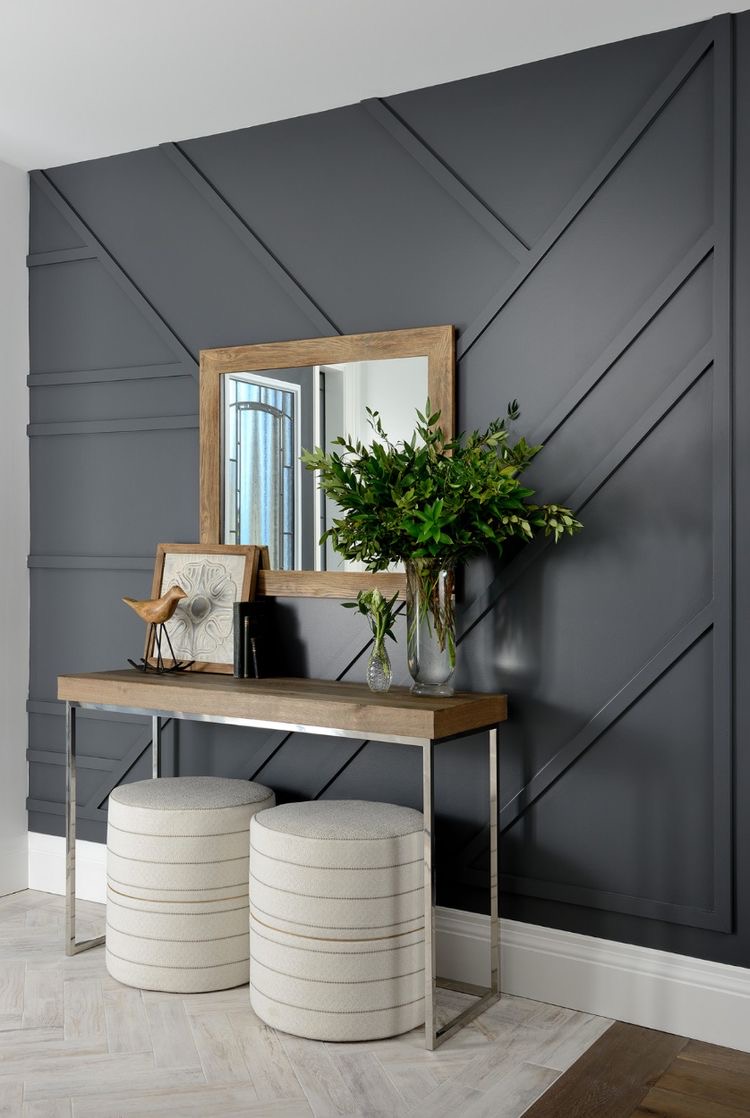
Image Credits: Pinterest
Natural-finish vertical wood slats are having a real moment, and there’s a good reason — they bring warmth, texture, and a clean modern line all at once. They’re also the rare accent wall that works beautifully in both contemporary spaces and traditional ones, depending on the wood tone you choose.
The trick is in the spacing. Slats too close together read as paneling; slats too far apart feel sparse. The sweet spot is usually around three-quarters of an inch to an inch of gap between slats, with the slats themselves about an inch and a half wide. Mount them on a stained or dark-painted backer so the gaps read as intentional shadow lines, not exposed drywall.
Where I’d use it. Behind a bed in a primary bedroom, behind a sofa in a living room, or as a feature wall behind a dining table. It plays especially well with ceilings 9 feet or taller — the verticality lifts the eye.
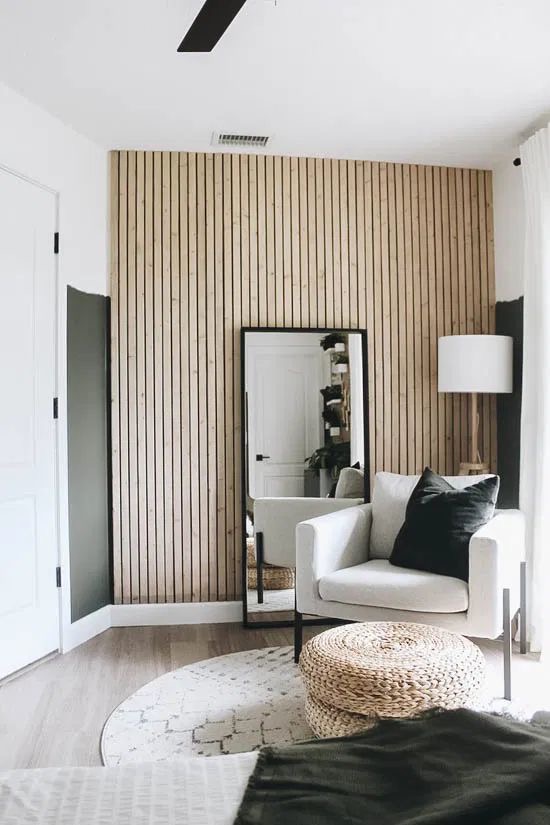
Image Credits: Within The Grove
Herringbone is one of those patterns that costs almost nothing in materials but looks like custom millwork. It’s planks laid at 45-degree angles to form the classic V-pattern — same idea as a herringbone tile floor, just up on the wall.
The example pictured was an in-progress wall — you can see the angle cuts and the trim still going on. Once it’s caulked, painted, and finished, the pattern almost disappears into a beautifully textured, monochromatic feature wall. I’d recommend keeping the paint color subtle on a herringbone wall — the pattern itself is doing the work, and a loud color competes with it.
Difficulty. Higher. Every cut is at an angle, and getting the seams to land cleanly takes patience. Worth it on a smaller accent wall (a powder room, a bed wall in a guest room) — I’d think twice before tackling a giant living-room-sized wall in herringbone for a first project.
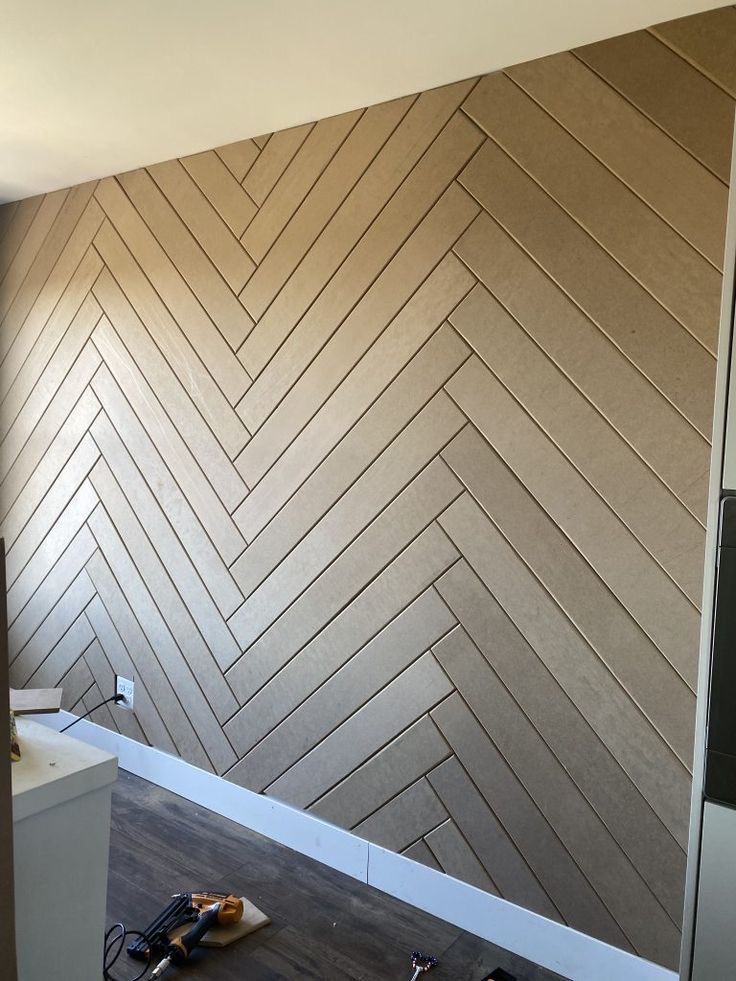
Image Credits: Home With Krissy
Real exposed brick is a dream and a structural reality — most of us don’t have it, and adding it is a major project. Faux brick paneling is the workaround, and the modern versions are good enough that I genuinely have to look twice to tell.
I’d lean into texture and finish here. Out of the box, most faux brick panels are too uniform and a little plasticky. Painting them helps — a thin whitewash, a German schmear, or a flat exterior paint in a warm white softens the finish and gives it depth. We did exactly this on our outdoor barbecue: brick veneer, painted Swiss Coffee by Behr Marquee, stippled into the grout lines so the paint sat naturally in the recesses. The result reads as old plaster over real brick, not new plastic panels.
Best room for it. A loft-style space, a basement bar, a fireplace surround, or a kitchen with industrial leanings. Skip it in formal traditional rooms — it’ll feel out of place.

Full tutorial here!
Wainscoting is the quietest treatment on this list, and probably the most timeless. It’s wood paneling on the lower portion of the wall — usually 32 to 48 inches up — capped with a chair rail and finished with paint. That’s it.
Where wainscoting earns its keep is in dining rooms, formal entries, hallways, and powder rooms. It instantly makes a room feel older (in the best way) and more architectural. The example pictured leans elegant — soft neutral on top, paneling below, simple framed art in the middle. It’s a look that ages forward, not backward.
A small upgrade I love. Paint the wainscoting and the wall above it the same color, in the same finish. It’s a more modern read, and it makes the room feel taller because the eye doesn’t stop at the chair rail line.
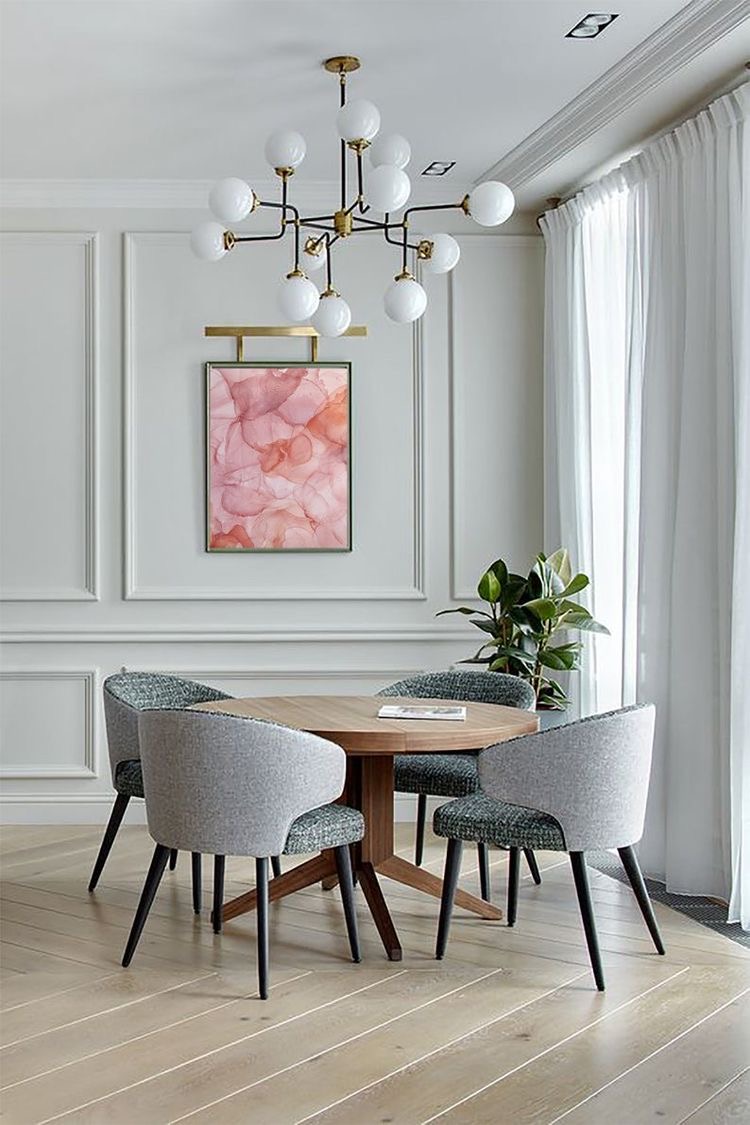
Image Source: Pinterest
This is the same construction as idea three — vertical wood slats — taken in a more dramatic direction. Instead of natural wood, the slats are painted a deep, saturated color: forest green, charcoal, navy, or a moody warm brown.
The effect is striking. The texture of the slats softens what would otherwise be a flat painted wall, and the dark color reads as luxurious without feeling heavy. The example pictured is exactly the right move — a deep green, behind a bed, paired with crisp white linens and warm wood. Nothing in that photo is fighting anything else.
My pick if you’re going dark. Benjamin Moore Southern Vine. It’s the dark-and-moody green I used on our floor-to-ceiling library wall, and it photographs as warm and earthy rather than cold. It also reads as black-green in low light and as a true forest green in daylight, which gives the room two different moods depending on time of day.
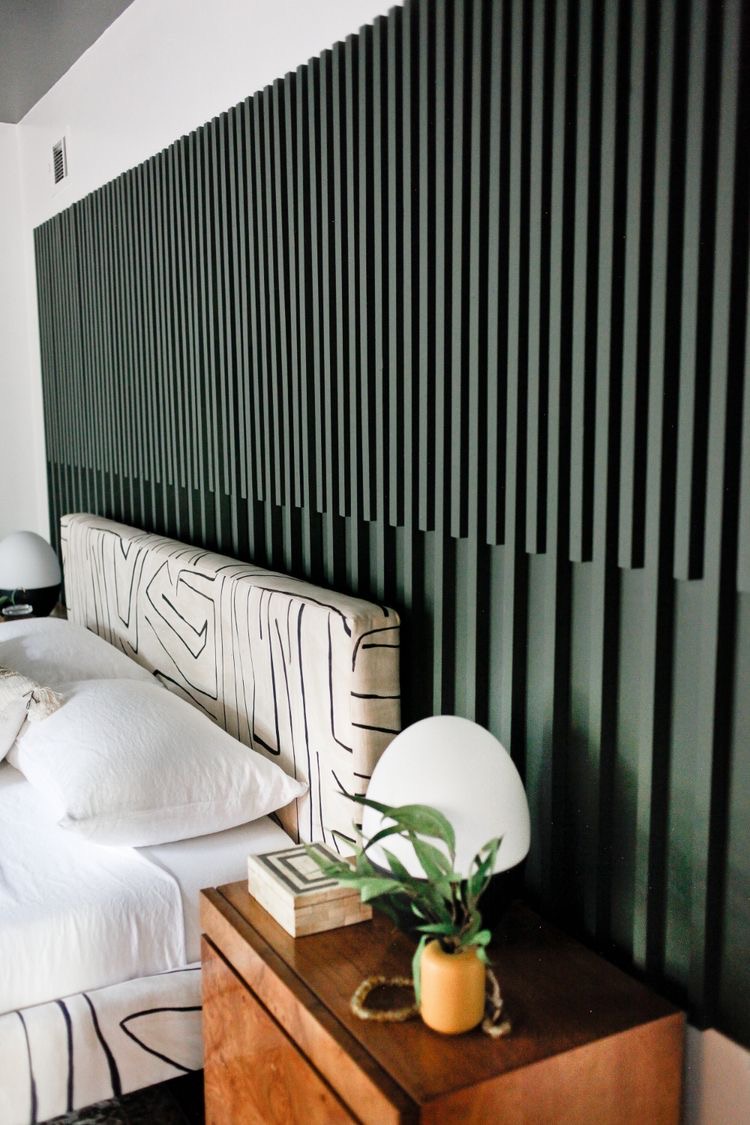
Image Credit: Carmeon Hamilton
The single most underused surface in interior design is the ceiling. Painting it is the closest thing to a design cheat code I know. It’s almost always white in builder-grade homes — meaning the moment you do anything else with it, the room reads as designed.
The example pictured is a textbook case: a deep painted ceiling with crisp white walls below. The dark above grounds the room and makes the bed feel like a four-poster even though it isn’t. It also draws the eye up, which actually makes a low ceiling feel more intentional rather than oppressive.
My version of this in our own house. I color-drenched our home office in Behr Calligraphy, walls, ceiling, trim, baseboards, closet doors, all the same deep blue. Color drenching is the more committed cousin of an accent ceiling, and it’s the move I’d recommend if the room is small enough to feel cohesive (an office, a powder room, a small bedroom). For larger rooms, just the ceiling is plenty.
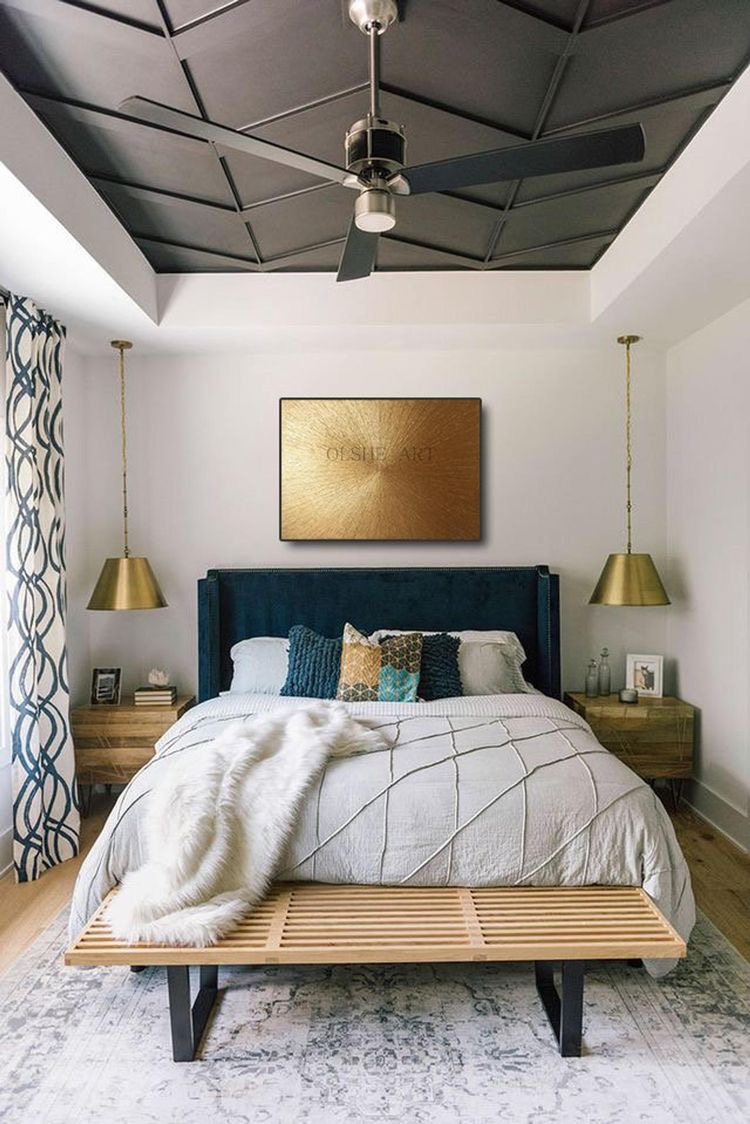
Image Source: Pinterest
A partial accent wall — meaning a treatment that doesn’t run floor to ceiling, but lives only behind a specific piece of furniture or a section of the room — is one of my favorite design moves for an open-concept space. It defines a zone without building a wall.
Adding lighting to it is the upgrade that turns a good accent wall into a great one. Sconces flanking a bed, picture lights above art, low-voltage strip lighting hidden behind slats — any of these turn the wall itself into the light source for that part of the room.
A note from experience. Plan the lighting before you build the wall, not after. Wiring runs through the wall structure, and it’s significantly easier to drop a junction box in the framing stage than to fish a wire later. If you’re DIYing without an electrician, plug-in sconces (with cord covers) and battery-powered puck lights are your friends — I’ve used them all over our house and the lighting reads identical.
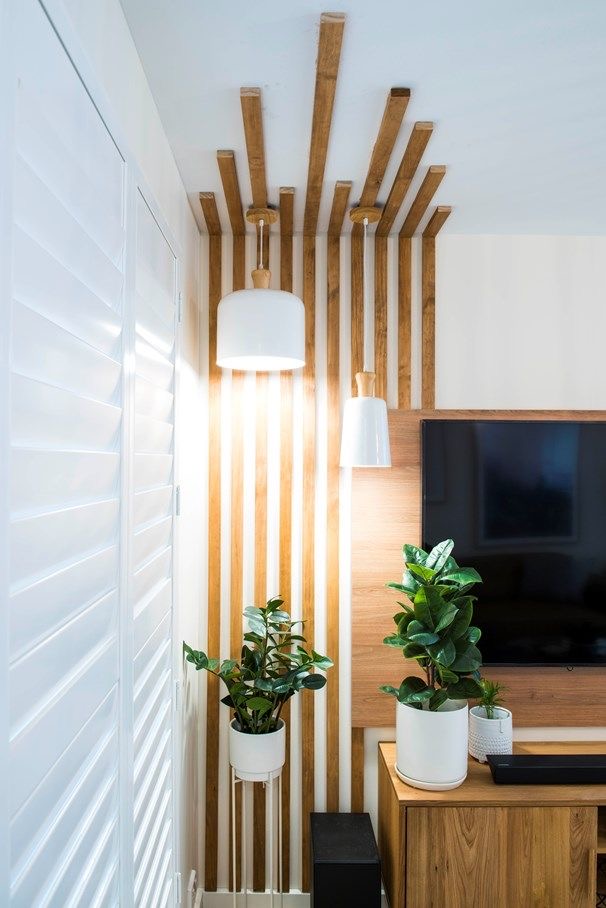
Image Credit: Katrina Chambers
Standard shiplap runs horizontally; diagonal shiplap runs at a 45-degree angle. It’s a small change, and the visual difference is enormous. Where horizontal shiplap reads as cottage-y or beach-house, diagonal shiplap reads as modern, dynamic, and a little graphic.
It’s a strong fit in a moody-painted office, a primary bedroom, or any room where you want movement on the walls without going as bold as wallpaper or a mural. The example pictured is dark green diagonal shiplap behind a small office shelving unit — the angles make the wall feel about three feet taller than it is.
One technical tip. Plan your starting corner carefully. The diagonal needs to look intentional from the moment you walk into the room, which usually means the lines should run upward from your dominant entry sightline. Tape the pattern out on the wall before you commit to the first cut.
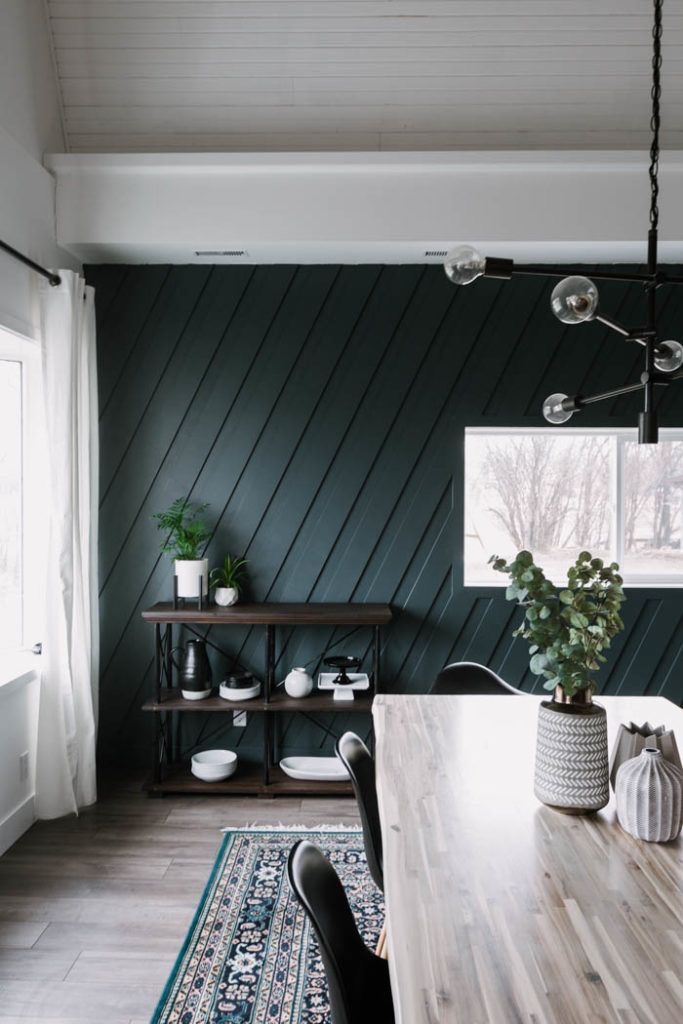
Image Credit: Love Create Celebrate
The most accessible accent wall in this entire list, and honestly the one I’d start with if it’s your first time. Paint one wall in a saturated color. That’s the whole project. A gallon of paint and a roller, in a single afternoon.
What makes a one-wall paint job sing is the color choice. A safe near-neutral tends to underwhelm — if you’re committing one whole wall to a different color, commit. A deep teal, a smoky charcoal, a terracotta, a warm earthy green. The example pictured is doing exactly this: a saturated teal-blue behind a rattan bed, with everything else in the room kept light and warm. The wall does all the work.
One small thing that makes a big difference. Take the color all the way to the corner, around any inside corner trim, and onto the back of the door if there is one. A painted wall that stops short of the corners reads as half-finished. A painted wall that wraps confidently reads as designed.
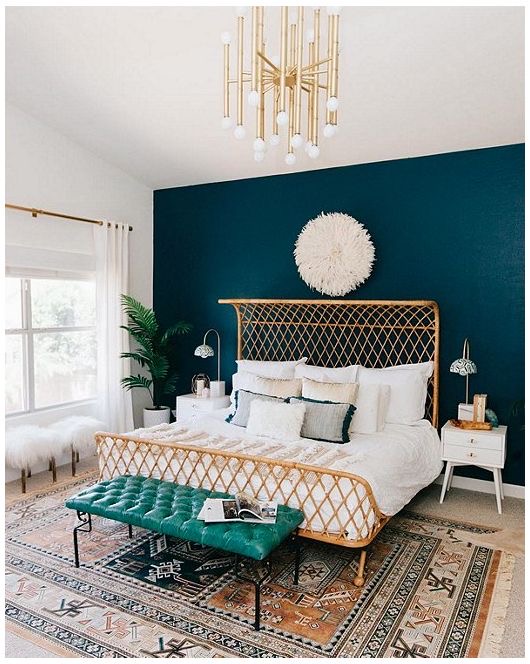
Image Credit: Ave Styles
There’s been a renaissance in wallpaper over the past five years, and it’s wildly different from the refresh package floral wallpaper of the eighties. The current generation of pattern wallpaper — botanical, scenic, geometric — is genuinely beautiful and works in modern homes.
The example pictured is a perfect use case: a tropical palm wallpaper behind a small breakfast nook. It’s a tight space, the wallpaper is the moment, and everything else around it is intentionally pared back (white tulip table, white chairs, woven pendant). That restraint is what makes the wallpaper work — when you’re using a bold pattern, the rest of the room has to step back and let it breathe.
My rule for wallpaper. Use it in small rooms or on single feature walls in larger rooms. Powder rooms, breakfast nooks, the wall behind a bed, the back wall of a small office. Wallpaper an entire living room and the eye has nowhere to land.
Lovery Insider's Club
Free home tips, DIY guides, and styling inspiration delivered straight to your inbox.
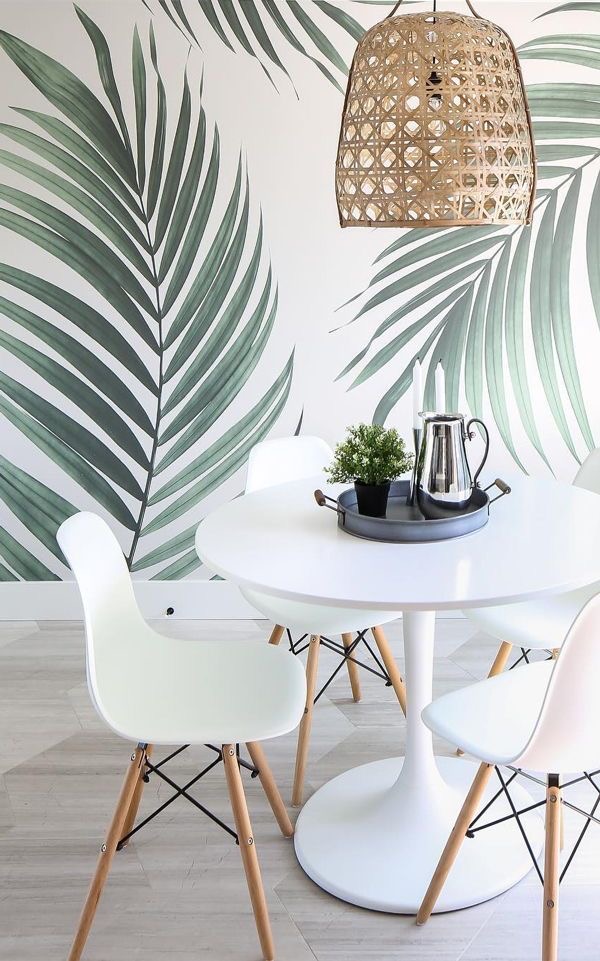
Image Credit: Pinterest
If you love the look of pattern but don’t want to commit to wallpaper — or you’re renting and can’t — a hand-painted or stenciled pattern is a fantastic alternative. The example pictured is a simple repeating sprig motif done with a paintbrush over a warm white wall. It looks expensive. It’s paint and patience.
I’d plan this one carefully on graph paper before you start, mark the wall lightly with pencil at consistent intervals, and use a small artist’s brush rather than a stencil — the slight variation between strokes is what gives it the hand-done charm. Stencils tend to read as commercial.
A budget version of this for kids’ rooms. Apply removable wall decals in a sprig or polka-dot pattern. They peel off cleanly, and they let you commit to a look without committing to a wall. We did a version of this idea with simpler removable elements when we transformed our home library into a toddler-friendly play area — sometimes the most family-friendly choice is the one that can be undone in an afternoon.
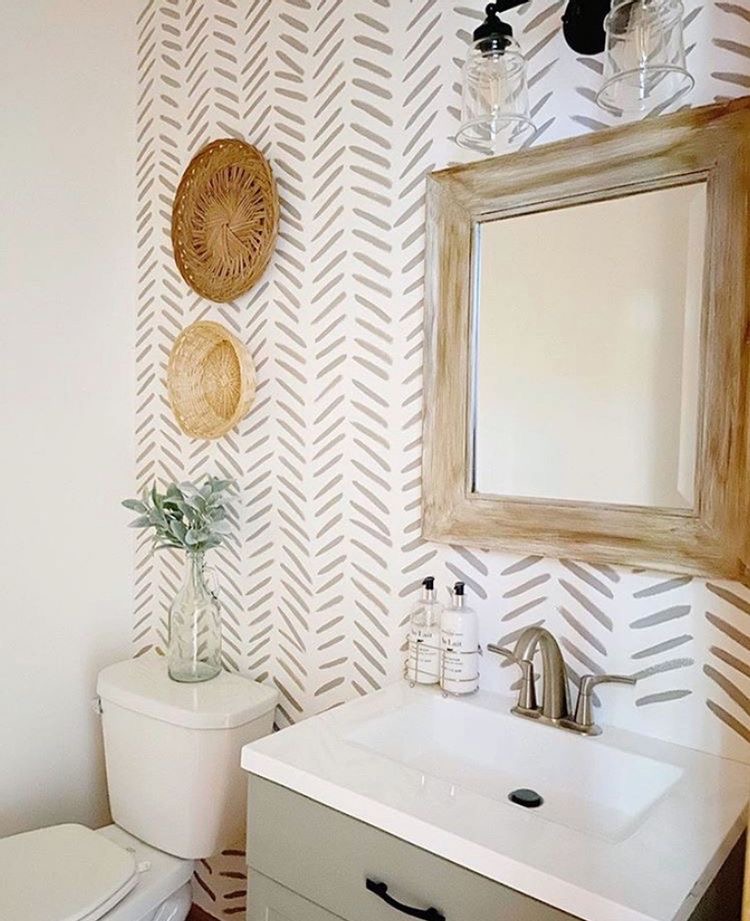
Image Credit: R&R At Home
A painted mural sounds intimidating, but the modern version of this trend is forgiving. The example pictured is essentially an ombré — a light wash at the top fading to a deep storm-cloud blue at the bottom, applied with a roller and a wet sponge to blur the transition. No fine art skills required.
A few rules that make this look land. Choose two to three colors in the same family, not three completely different colors. Work top-down with the lightest color first, fully covering the wall, then add the darker color from the bottom up while the first coat is still slightly damp so the colors blend. Use a wide synthetic-bristle brush for the transition zone, working in long horizontal strokes.
The room I’d put this in. A nursery, a primary bedroom, or a small reading nook. The softness of the technique pairs beautifully with linen bedding and warm wood furniture. It’s the kind of accent wall that becomes a quiet statement, not a loud one.

Image Credit: Taryn Whiteaker
Bead board is the close cousin of shiplap and wainscoting — vertical narrow grooved planks, traditionally painted white. The trick that makes it feel modern is to skip the white and paint it a saturated, slightly unexpected color instead.
The example pictured is bead board run all the way to the ceiling in a moody charcoal-blue, paired with brass globe sconces and a small Chris Loves Julia art piece. It’s a dramatic, sophisticated look in what’s probably a small space — the dark color makes the room feel like a jewel box rather than a closet.
Where to put it. Bead board loves small rooms. Powder rooms, mudrooms, butler’s pantries, narrow hallways. The vertical lines elongate the room visually, and a saturated color makes the small footprint feel intentional rather than tight. Avoid bead board in already-large rooms — it can read as visually busy.
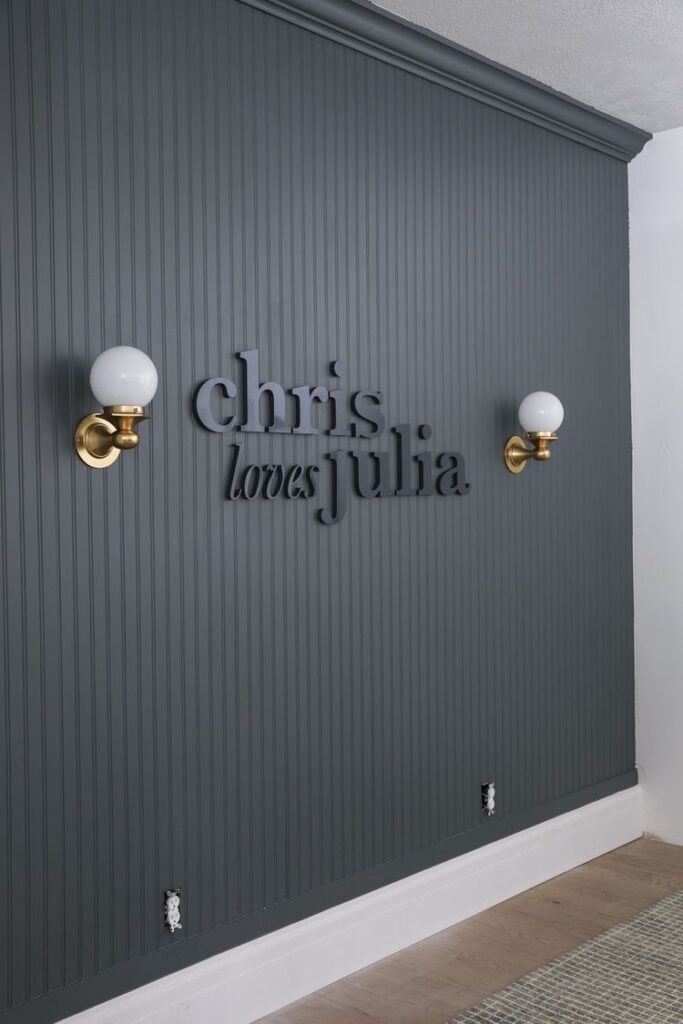
Image Credit: Chris Loves Julia
These are the questions that come up most often when I’m helping clients think through an accent wall — and the questions that pop up consistently in my DMs. Save this section as a reference, or send it to the partner you’re trying to convince that, yes, you really should paint that wall.
The accent wall should be the focal wall — the one your eye lands on when you walk into the room. In a bedroom, that’s almost always the wall behind the bed. In a living room, it’s usually the wall behind the sofa, or the wall opposite the entry. In a dining room, it’s the wall the table faces. Don’t accent a side wall or a wall the room doesn’t naturally orient toward — the treatment will fight the layout instead of anchoring it.
Almost never, and often the opposite. Counterintuitively, a darker or boldly-treated accent wall in a small room can make the space feel larger, because it creates depth and a sense of receding distance. What does make a small room feel smaller is a busy patterned wall on every wall, or a treatment that visually halves the height of the room. One bold accent wall, plus restraint everywhere else, is the right ratio.
Wide range, but here are realistic numbers from projects I’ve actually done. A paint-only accent wall: $40–80, including a quart of paint, a roller, painter’s tape, and a small brush. Board and batten: $150–300 in materials for an average wall, plus paint. Wood slats: $200–500 depending on the wood. Custom paneling or built-ins: $500 and up, depending on materials and trim. None of these include tools — if you’re starting from zero, add another $150–300 for a level, miter saw access, brad nailer, and caulk.
Yes, and there are more renter-friendly options than ever. Removable peel-and-stick wallpaper is the obvious one — modern brands hold up well and come off cleanly when you move out. Removable wall decals work for pattern. For a textured look, faux brick paneling can be installed with construction adhesive that’s gentler on drywall, though always check your lease first. And the simplest of all: paint. Most landlords are fine with paint as long as you return it to the original color before move-out — the cost of a gallon of white paint to undo it is almost always worth the year of living in a room you actually love.
Paint one wall. Truly. Pick the focal wall, pick a saturated color you actually love, tape carefully, and roll. It’s a four-hour project, it requires zero specialty tools, and the visual payoff is dramatic. If painting feels too understated, board and batten is the next step up — straight cuts only, very forgiving, and the kind of project that looks much harder than it is.
Mixed answer. A tasteful, neutrally-toned architectural accent wall — board and batten, wainscoting, simple paneling — generally adds perceived value because buyers read it as architectural detail. A loud color or a very specific pattern can be polarizing on resale, even if it photographs beautifully. The honest take: don’t choose your accent wall based on resale. Choose it based on whether you’ll love living with it. If resale is a near-term concern, lean into the architectural treatments (paint or paneling in a neutral) rather than bold pattern or saturated color.
Eggshell or matte for most accent walls — it hides imperfections, photographs well, and doesn’t show roller marks the way satin and semi-gloss do. Save satin and semi-gloss for trim, doors, and bathroom walls where you need washability. The exception: a true high-gloss lacquer accent wall (think a deep navy ceiling) can be stunning, but it’s much harder to apply well and demands a perfectly prepped wall.
If there’s one thing to take from this list, it’s that the wall comes first. Find the wall in your room that wants to be the focal point, then choose the treatment that fits the room’s mood. A board-and-batten wall in a quiet bedroom, a moody color-drenched ceiling in a small office, a slat wall behind the bed in a primary suite — none of these are about the technique. They’re about choosing the right treatment for the wall you already have.
If you decide to take one of these on, I’d love to see it. Tag @lizlovery on Instagram, or send me a DM with the room you’re working on — I read all of them, and I always love seeing what people make.
Design & Styling The Collected Gallery Wall: How To Make Your Art Look Curated, Not Coordinated By Liz Lovery · Updated August 24, 2026 The
The real plants that grow in full shade, the faux ones that actually look convincing, and how to style both on a front porch that gets almost no sun.
Renovations The Paisley Project: transforming a neglected 1961 California ranch into a timeless family home