
Design & Styling
5 Interior Design Tips for Beginners
Quick Answer
The five interior design tips for beginners that matter most are: plan the room before you buy anything, build your palette around one anchor piece, invest in furniture that will hold up (check the rub count), layer textures and style accessories in odd numbers, and get the scale right so everything feels intentional instead of off.
Most beginner interior design advice will tell you to find your style and stick to it. I think that's the wrong place to start. When I was first decorating my own home, I didn't have a "style" — I had a room with a couch in it and a vague feeling that something was off. What I needed wasn't a Pinterest board. I needed someone to walk me through how a designer actually thinks about a space before they buy anything.
So that's what this is. Five interior design tips I wish I'd had on day one, written for the person standing in an empty (or almost empty) room wondering where on earth to start. Some of these will sound obvious. The reason designers can charge a few thousand dollars a room is that the obvious ones are the ones beginners skip.
How do you start designing a room as a beginner?
Before you buy a single thing, plan the room. I know that sounds like a throwaway line, so let me tell you what I actually mean by it — because this is the step where most beginners lose the most money.
When I start a new room, I sit down with a piece of paper (or SketchUp, if I'm being fancy) and I answer four questions. What's going to happen in this room? Who's going to use it? What's the one feeling I want when I walk in? And where is the natural light coming from? I'll move furniture around on paper a dozen times before anything gets bought, because moving a sofa on paper is free and moving a real one is a three-person job and a backache.
The reason planning matters so much for beginners is that you only really learn what doesn't work in a room by living in it. A designer is just someone who's lived in (and made mistakes in) a lot of rooms. The plan is how you borrow that experience without having to earn it the hard way.
My rule
If I can't sketch the room from memory and tell you exactly where every major piece will go, I'm not ready to buy yet. Every time I've broken this rule, I've returned something.
How do you choose a color palette for a room?
Beginner advice on color usually starts with the color wheel. I'd rather start with one piece of furniture.
Pick the one piece in the room that you can't easily change — a sofa, a built-in, a rug you already own — and let that piece anchor your palette. Everything else gets pulled from it. If your anchor is a creamy linen sofa, your palette already wants to live in warm whites, soft browns, and natural fibers. If your anchor is a deep navy bookcase, you've already got permission to pull in brass, parchment, and a warm clay accent. The anchor does the hard work for you.
The other rule I follow is to keep the big pieces neutral and put your color in the things you can swap out. Sofa, dining table, bed frame — those are neutral. Pillows, throws, art, ceramics — that's where color lives. It's a low-commitment way to bring personality into a space, and it means you can completely change a room's mood with $100 worth of textiles instead of $3,000 worth of furniture.
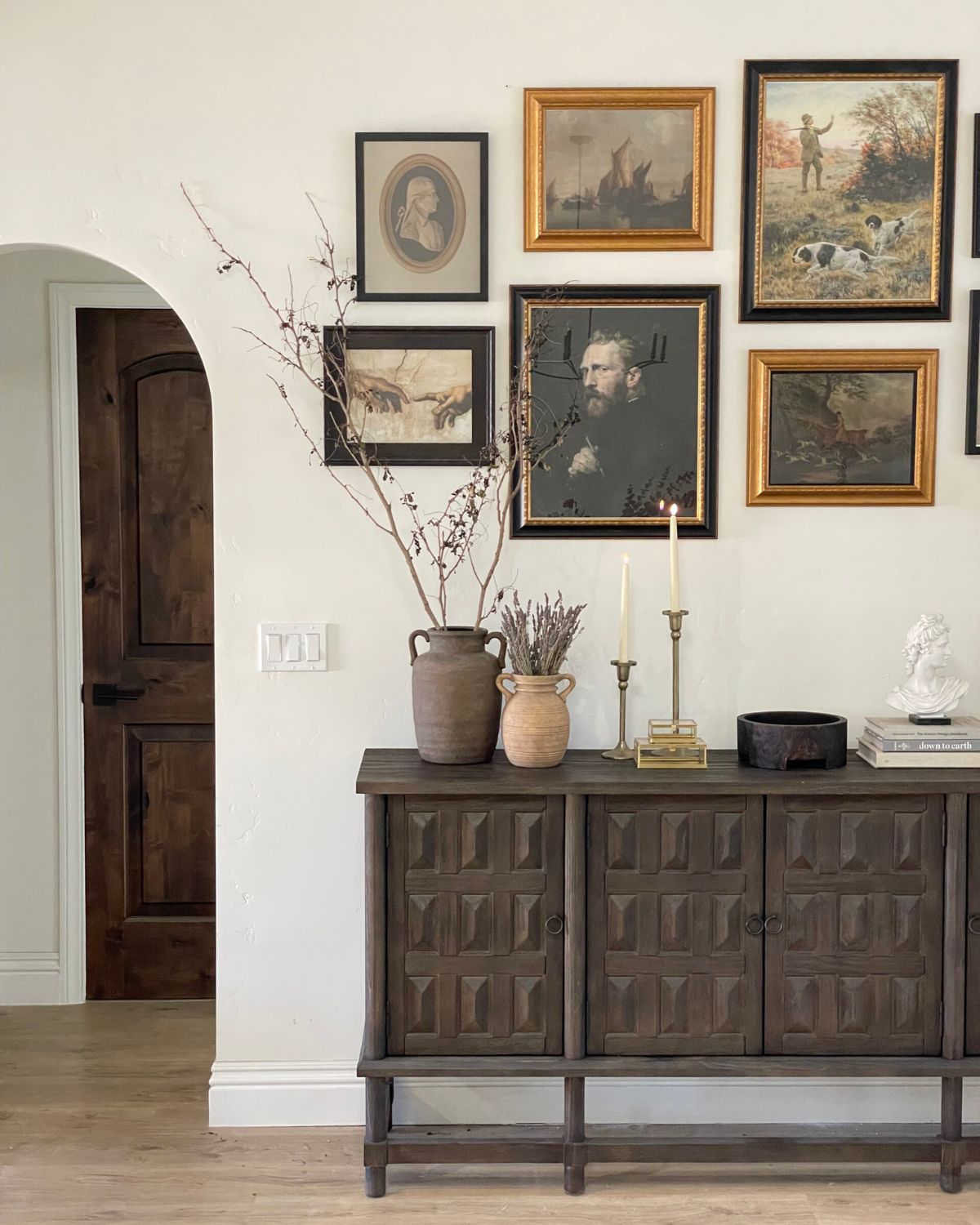
One more thing about color: don't underestimate it. I'm someone who lives in neutrals, and even I'll tell you that a room with no color at all reads as unfinished. You don't need a lot — you just need somewhere your eye can land that isn't white or beige or wood. A single moody color on a built-in, a piece of art with real saturation, a velvet pillow in a deep rust — that's all it takes.
What should beginners look for in furniture?
Furniture is where beginners overspend, underspend, or both. The trick is knowing what's worth the splurge and what's not.
Splurge on the pieces you sit on, sleep on, or eat at every day. A sofa, a dining table, a bed frame. These take the most wear, they set the tone for the room, and they're the hardest to replace. A $400 sofa that breaks down in eighteen months is more expensive than a $1,400 sofa that lasts ten years — that's not loyalty to a brand, it's just math.
Save on the pieces you'll want to change in a few years anyway. Side tables, accent chairs, lamps, mirrors. These are where Facebook Marketplace and thrifted finds shine. I have a $30 antique brass lamp that I love more than anything in my house, and I have a sofa that cost me thirty times that.
The one thing nobody tells beginners: rub count
If you're buying any upholstered furniture — a sofa, an armchair, a settee, a banquette — pay attention to a number called the rub count. You won't see it on Wayfair. You'll see it on the spec sheet of any real furniture brand.
Rub count (sometimes called the Wyzenbeek or Martindale test) is a durability rating for upholstery fabric. It's literally a number based on a machine that rubs the fabric back and forth and counts how many cycles it survives before it shows wear. The higher the number, the longer the fabric lasts.
| Rub count | Use it for |
|---|---|
| 3,000–9,000 | Decorative only — pillows, headboards, curtains |
| 9,000–15,000 | Light residential — guest rooms, formal living rooms |
| 15,000–30,000 | Heavy residential — family sofas, dining chairs, daily-use upholstery |
| 30,000+ | Commercial-grade — high-traffic homes, rentals, families with kids and pets |
If a retailer doesn't publish a rub count, that's information too. It usually means the fabric is on the lower end and they'd rather not say so. For anything that will get daily use in a home with people and pets in it, I won't go below 15,000 — and if you have small children or a dog with claws, look for 30,000+ and you'll thank yourself in three years.
How do you style a room so it looks finished?
A room is "designed" the moment the big pieces are in. A room is "styled" when it starts to feel like someone lives in it. The difference is layering.
Layering is what I do at the end of a project, and it's the part most beginners skip. It's about texture, height, and the slightly unscientific art of arranging the small things on top of the big things. Two techniques will get you 90% of the way there.
Style in odd numbers
When you're arranging accent pieces on a coffee table, a shelf, a mantel, or a side table, group them in odd numbers — three is the magic one. Pairs read as symmetrical and a little static. A group of three reads as composed but alive. If you have four objects you love, use three and put the fourth somewhere else.
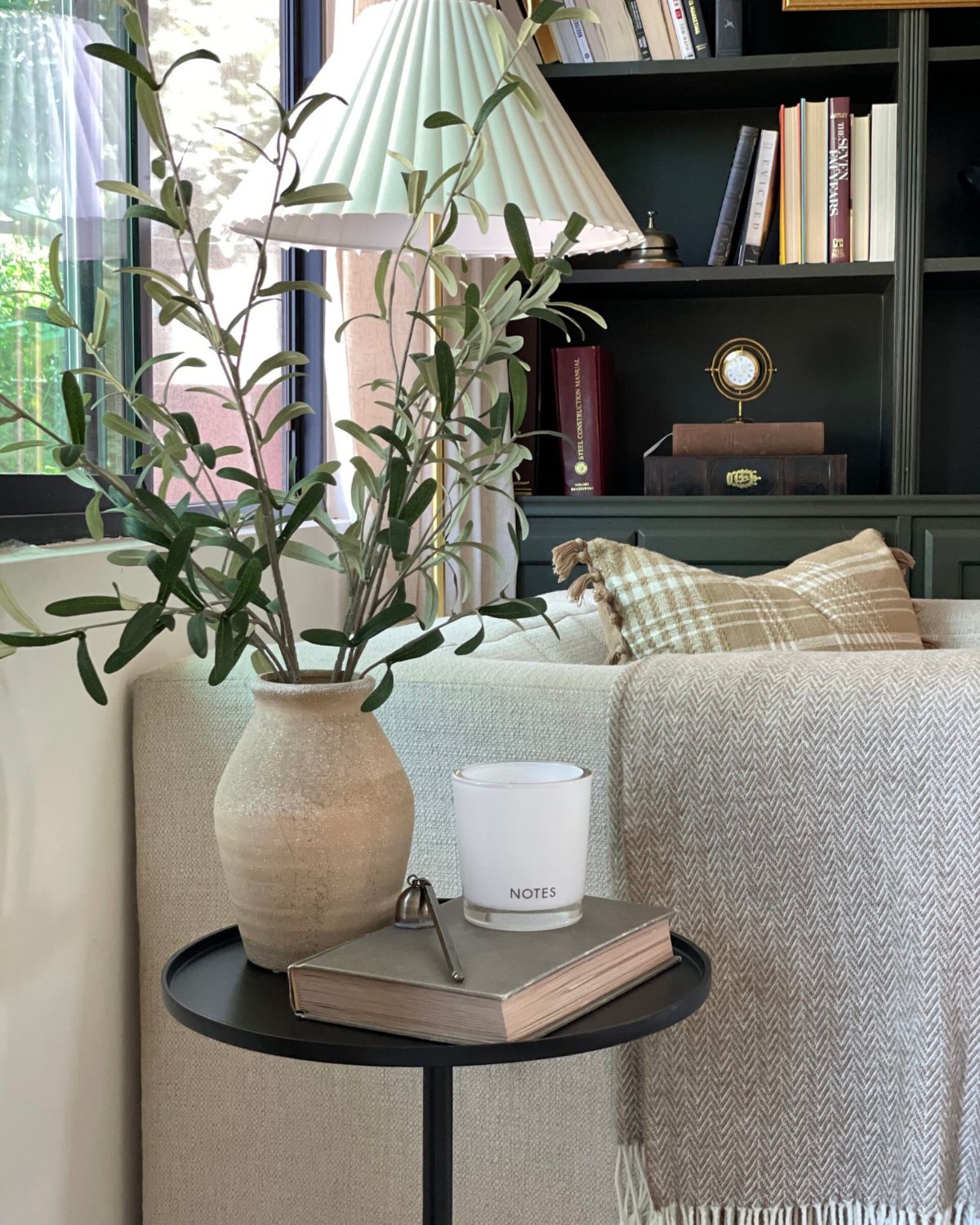
The same rule works for staggering heights. I'll often do a tall object (a vase with stems), a medium object (a stack of books), and a small object (a ceramic, a small framed piece, a candle). The eye moves across the trio instead of getting stuck on any one piece.
Stack and layer for depth
The second trick is what designers call stacking and layering. Stacking is putting one thing on top of another — books on a tray, a small ceramic on top of a stack of books, a candle on top of a vintage box. Stacking adds height. Layering is putting one thing in front of another — a small piece of art leaning against a larger one, a vase tucked in front of a stack of cookbooks. Layering adds depth.
Together, stacking and layering are why a designer's coffee table looks "finished" and a beginner's coffee table often looks like four random objects on a flat plane. There's no rule that says you can't put one thing on top of another. In fact, the rule is that you should.
Texture matters too. A room full of one finish — all wood, all linen, all matte — reads flat. Add a piece of brass, a slubby boucle pillow, a piece of stoneware, a bit of leather. Mixing textures is what makes a room feel collected instead of catalog.
Why does scale matter in interior design?
If I had to pick the single skill that separates a designed room from a not-quite-right one, it would be scale. Scale is the relationship between the size of something and the size of the space (or the other things) around it. Beginners get this wrong constantly, and it's the reason a room can have beautiful pieces in it and still feel off.
A few rules I rely on, all of them very specific:
Floating shelves
Hang shelves 12 to 18 inches apart vertically. Anything closer feels cramped; anything wider feels like the shelves don't belong to each other. Adjust within that range based on the height of the wall and what you plan to display.
Pendant lights over an island
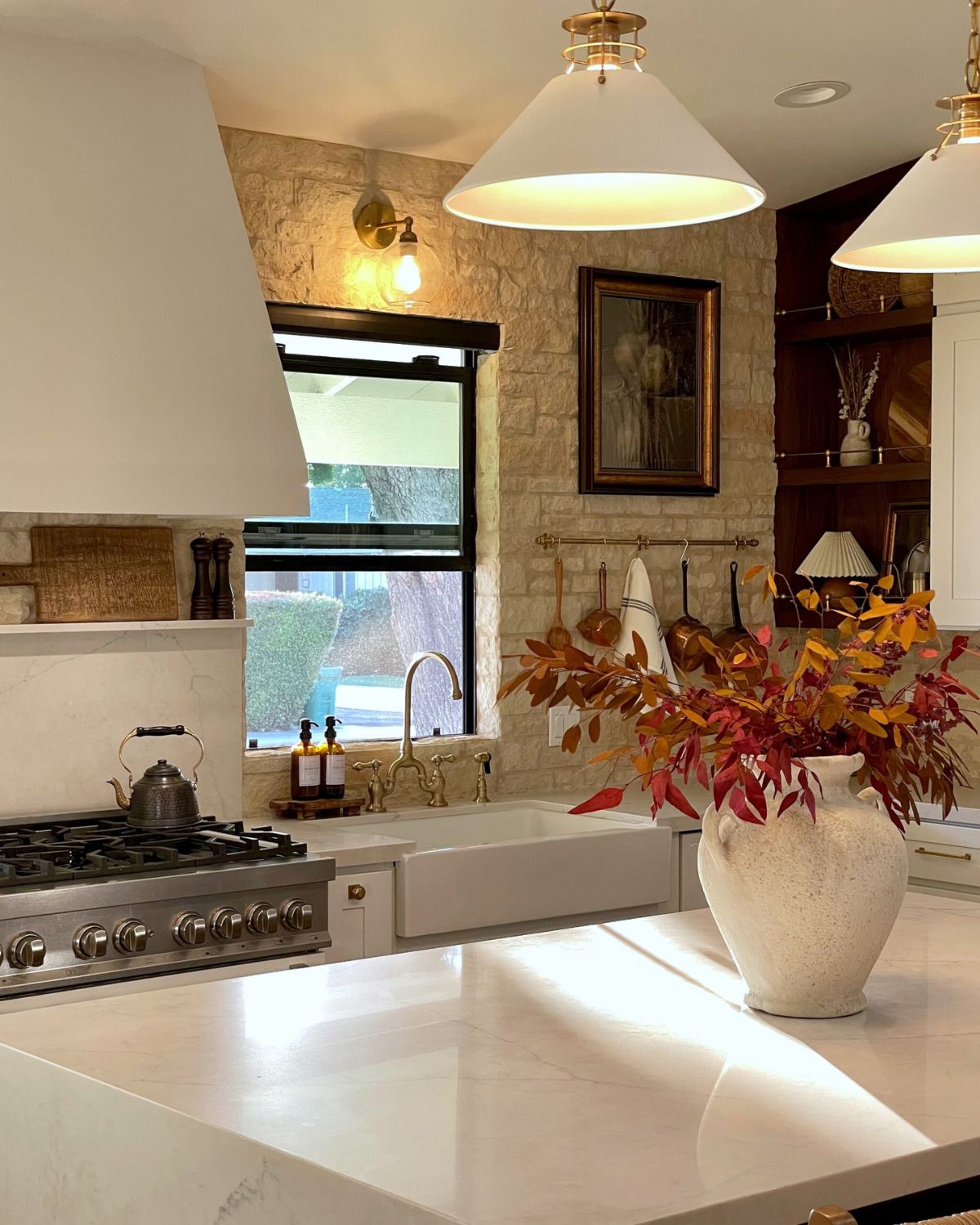
Hang the bottom of the pendant 30 to 36 inches above the countertop. Fewer, larger pendants almost always look better than more, smaller ones — two large pendants over a six-foot island will read more intentional than three small ones. If you have three, leave roughly equal spacing between them and the ends of the island.
Curtains
Hang the rod high and wide. The rod should be roughly 4 to 6 inches above the window trim — or even higher, ceiling-mounted, for shorter rooms — and extend 6 to 12 inches past the window on each side. Curtains should brush the floor or "kiss" it (a half inch above). Anything above the floor reads as too short, full stop.
Art over a sofa
The art (or the cluster of art) should be roughly two-thirds the width of the sofa. The bottom of the frame should sit 6 to 12 inches above the back cushions. Smaller than two-thirds and the art looks lonely. Larger than the sofa and the sofa stops being the focal point.
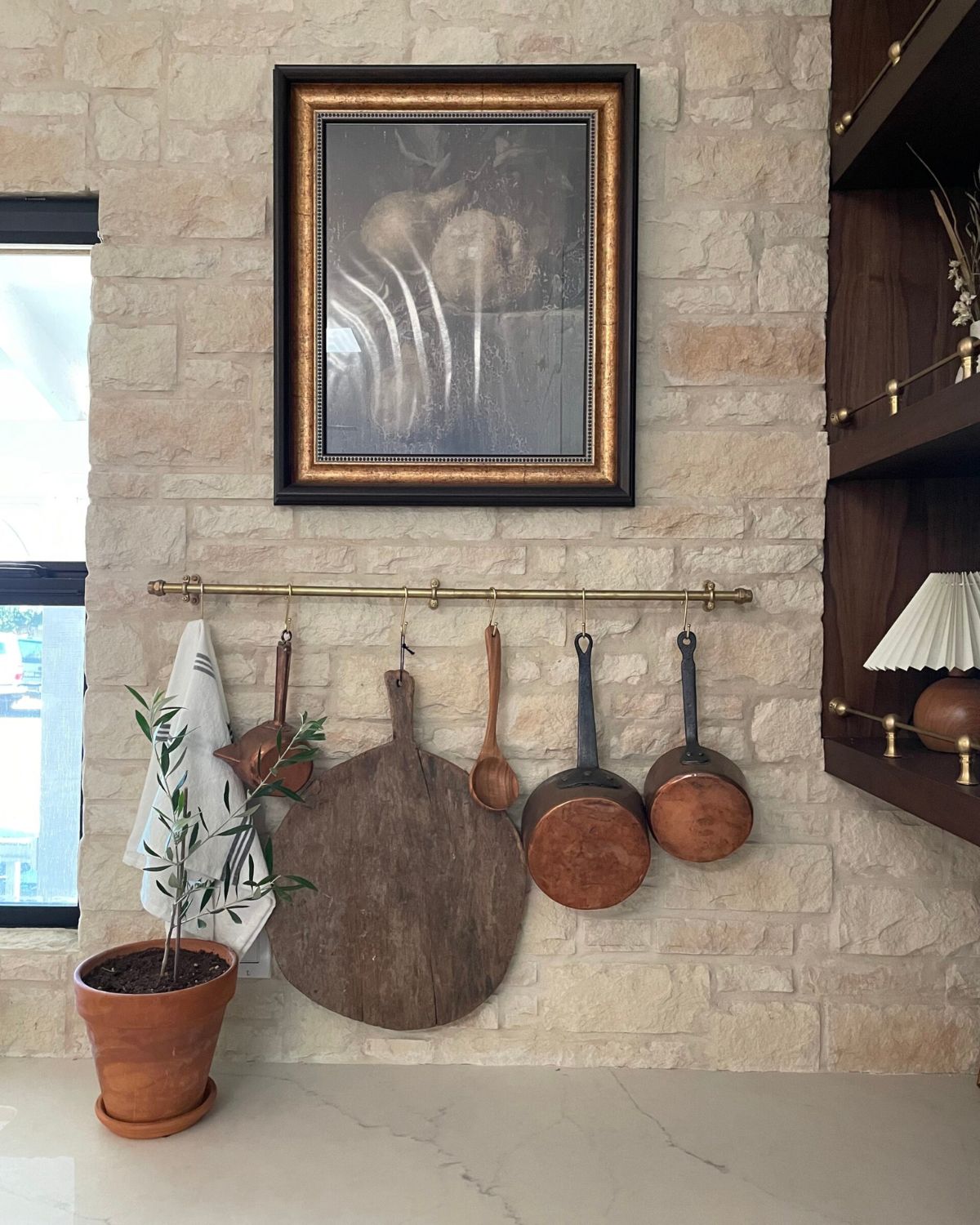
Scale is the single skill that separates a designed room from a not-quite-right one.
None of these numbers are commandments — every room has its own logic. But if you're a beginner and you don't know where to start, these are the defaults that will get you 90% of the way there. Break them on purpose, not by accident.
Beginner interior design questions, answered
What is the most important rule of interior design?
The most important rule of interior design is to plan the room before you buy anything. Planning forces you to decide how the room will function, where the natural light falls, and what pieces actually fit — which is what prevents the expensive mistakes most beginners make when they shop first and plan later.
How do I find my interior design style?
Look at the rooms you save on Pinterest or Instagram over a few weeks and look for the patterns — the colors, the materials, the levels of clutter or restraint that keep showing up. Your style isn't something you choose; it's something you notice. Start there and let your home develop from real preferences instead of trend names.
What's the 60-30-10 rule in interior design?
The 60-30-10 rule is a color-distribution guideline that says about 60% of a room should be your dominant color (often walls and large furniture), 30% a secondary color (rugs, upholstery, drapery), and 10% an accent color (pillows, art, ceramics). It's a useful starting point for keeping a palette balanced without feeling rigid.
How much should I spend on a sofa?
For a sofa you'll use daily, plan to spend at least $1,200 to $2,000 to get one with a hardwood frame, eight-way hand-tied springs, and an upholstery fabric with a rub count of 15,000 or higher. Below that, you're usually buying a sofa that will need replacing in two to four years, which costs more in the long run.
What are the most common interior design mistakes beginners make?
The most common beginner mistakes are buying furniture before planning the layout, hanging art and curtains too low, choosing rugs that are too small for the room, skipping texture so the room feels flat, and forgetting to layer lighting at multiple heights. Almost all of them come from rushing the plan stage.