Lovery

• RENOVATIONS •

How to set a home renovation budget, from real experience.

Here are my go-to tips for budgeting for a home renovation, what to budget for, and resources to stay on track!
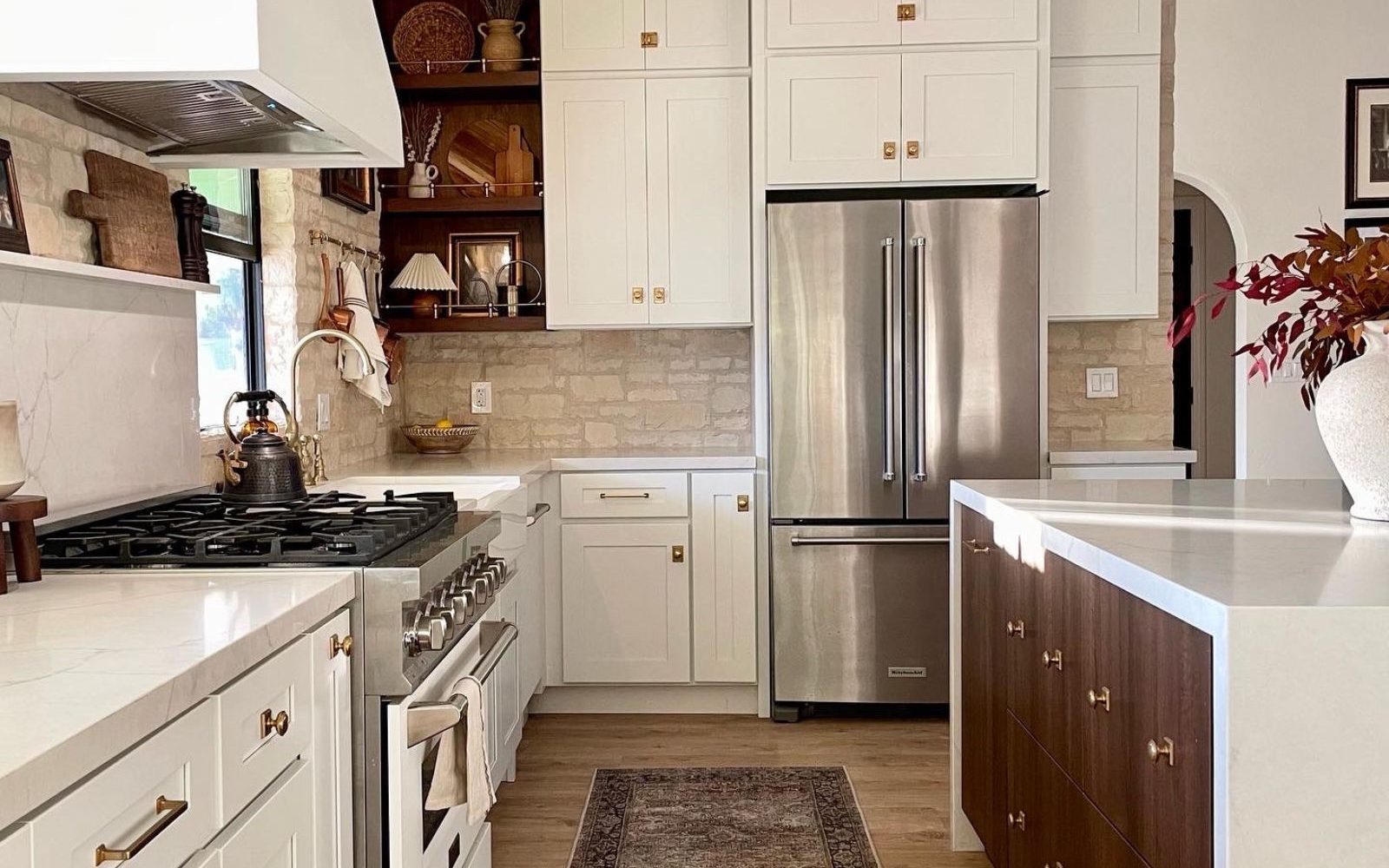
Renovated kitchen with white shaker cabinets, brass hardware, marble countertops, stone backsplash, and walnut island — a finished example of a thoughtfully budgeted home renovation.

Budgeting a home renovation isn’t about being precise — it’s about being prepared. After four full renovations, here’s the framework I use every time, the three categories that catch most people off guard, and the contingency rule we will never break again.

INSIDE THE GUIDE

When my husband and I bought our first fixer upper in 2021, we made a lot of mistakes — but the one that still makes me laugh (and slightly wince) is starting demo one month before our wedding. The wiring was open, the walls were down, and I was trying on dresses in between trips to Home Depot.

That renovation taught us nearly every lesson worth learning about budgeting. Three more renovations later — including our 1956 California rancher and two investment properties — here’s the framework I use every single time. It’s not complicated. It just requires honesty about what a renovation actually costs, and a willingness to plan for the things you can’t predict.

Shop the Post

Shop Renovation Projects

Plan Well, and plan ahead.

The single most expensive mistake we made on our first renovation was rushing the planning stage. We were excited, we wanted to start, and we thought we’d “figure it out as we go.”

That phrase — “figure it out as we go” — will cost you tens of thousands of dollars on a real renovation. Every decision you defer is a decision someone else will make for you, usually at a premium, and usually under time pressure.

Before you set a single dollar amount, give yourself at least 30 days of pure planning time. Walk the house. Take measurements. Sketch what you want. Pull inspiration. Get rough quotes from two or three contractors so you understand the local labor rates. Pick your finishes — the cabinet style, the countertop, the flooring — before demo starts, not during.

Every decision you defer is a decision someone else will make for you, usually at a premium, and usually under time pressure.

I know it doesn’t feel productive to “just plan.” But the planning month is the highest-leverage time you’ll spend on the entire project. It’s when the budget is most malleable, the timeline is most flexible, and the decisions are the cheapest to change.

Set a contingency - always.

The second renovation rule we will never break again: set aside 10 to 20 percent of your total budget for contingency. Not “if we have it left over.” Not “in case.” Allocated, locked in, untouchable.

Our first renovation happened during the supply chain crisis of 2021. Materials we’d budgeted for arrived months late or didn’t arrive at all. Substitutions cost more. Discoveries behind walls — old plumbing, cracked subfloor, hidden water damage — turned into multi-thousand-dollar line items that didn’t exist on day one.

On a $100,000 budget, a 15 percent contingency means $15,000 set aside for the inevitable surprises. On a $40,000 budget, it’s $6,000. It feels like a lot until you need it, at which point it feels like the smartest money you ever held back.

How to think about contingency

  • 10 percent for newer homes (built after 2000) with cosmetic-only renovations
  • 15 percent for moderate renovations or homes built 1980–2000
  • 20 percent for fixer uppers, older homes, or any renovation involving plumbing, electrical, or structural work
A woman sitting on exposed wood framing inside a home mid-renovation — the structural phase where renovation budgets are most often tested.
Sitting in the bones of our latest renovation. This stage — framing, structural work, the parts you'll never see again — is where the budget gets real.

Structural needs.

Once you’ve planned and set your contingency, the rest of the budget breaks into three categories. The first, and usually largest, is structural needs — the work that makes the house livable. This is the unsexy bones of any renovation. It’s also where most first-time renovators dramatically underestimate.

Structural costs typically include:

  • Demo and dump fees: tearing out the old, hauling it away
  • Framing: new walls, opened ceilings, structural changes
  • Foundation: only relevant if you’re addressing settling, cracks, or major changes
  • Floors: subfloor repair plus the actual flooring material and labor
  • Drywall, sheetrock, and plaster: far more expensive than people realize
  • Windows and doors: both the units and the labor to install
  • Stucco, siding, and exterior repair
  • Roofing: if it’s part of the project scope
  • Lumber and framing materials: volatile pricing, get current quotes

On a moderate full-home renovation, structural costs typically consume 30 to 45 percent of the total budget. On a fixer upper, sometimes more. This is where labor costs hit hardest, because almost none of this work should be DIY’d unless you have professional experience.

Functional needs.

The second category is the systems that make the house actually work. These are the costs that catch homeowners off guard the most, because the materials feel inexpensive until you add the labor.

Functional needs include:

  • Plumbing: rough-in, fixtures, water lines, drain lines, anything behind the wall
  • HVAC: heating, cooling, ductwork, ventilation
  • Electrical: panel upgrades, rewiring, outlets, switches, lighting circuits
  • Anything else that makes the house function: gas lines, water heaters, water softeners, etc.

Here’s the rule that saved us thousands: functional systems are not where you DIY. Plumbing and electrical require permits, inspections, and licensed work in most jurisdictions for a reason. A DIY-ed plumbing leak inside a wall isn’t a small mistake — it’s a renovation-killer. Hire it out, get permits, and budget honestly.

Functional costs typically consume 20 to 30 percent of a full renovation budget. On homes built before 1970, lean toward 30 percent — old plumbing and electrical almost always need to be addressed.

If you’re evaluating an older home before you buy it, my husband Ryan, a San Diego Realtor, wrote a guide on what to look for when viewing a house, including the systems that quietly cost the most in older homes.

Interior details.

The third category is everything that turns a house back into a home. This is the fun stuff — the cabinetry, the lighting, the hardware, the moments that get photographed. It’s also the category most likely to balloon if you don’t watch it.

Interior details include:

  • Cabinetry: kitchen, bathroom, built-ins, mudroom
  • Countertops: quartz, marble, butcher block, you name it
  • Appliances: range, refrigerator, dishwasher, microwave, hood
  • Hardware: cabinet pulls, door knobs, hinges, faucets
  • Light fixtures: pendants, sconces, chandeliers, recessed
  • Window treatments: shades, drapes, hardware
  • Tile and backsplash
  • Paint: both labor and materials add up faster than you’d think

A note on what’s not in this category: furniture. Sofas, beds, dining tables, rugs, decor — all of that is a separate budget. Folding it into your renovation budget is one of the fastest ways to overspend.

Interior details typically run 25 to 35 percent of a full renovation budget, but this is also the category with the widest swing based on personal taste. A $4,000 stove and a $14,000 stove do roughly the same job. A $200 faucet and a $1,200 faucet pour the same water. This is where you make decisions about where the dollars matter most to you.

The budgeting tools we still use.

After four renovations, here are the tools and resources I’d actually recommend — not because they’re sponsored, but because they’ve saved us money in real projects.

For estimating before you start

Bankrate’s home renovation calculator gives you a useful starting range based on square footage and finish level. Take the result and add 20 percent — their numbers tend to run optimistic.

For tracking once you're in

A simple Google Sheet, broken into the three categories above, with two columns: Estimated and Actual. Update weekly. The delta between estimated and actual is the most honest mirror you’ll ever have during a renovation.

For finding contractors

Word of mouth from people who’ve actually used them. Online reviews are useful, but in our experience, the contractors who show up consistently are the ones a friend will personally vouch for. Ask three people.

Common questions about renovation budgets.

How much should I budget for a home renovation?

Most full home renovations fall between $100 and $200 per square foot for moderate finishes, and $200 to $500 per square foot for high-end finishes. A 2,000 square foot home renovation at moderate finishes is roughly $200,000 to $400,000 before contingency. Always layer the 10 to 20 percent contingency on top of that.

What is the most expensive part of a home renovation?

Kitchens and bathrooms are typically the most expensive rooms per square foot, due to the combined cost of cabinets, countertops, appliances, plumbing, electrical, and tile work. A full kitchen renovation in 2026 averages $25,000 to $75,000 depending on finish level.

Can I save money by DIYing parts of the renovation?

Yes, but selectively. Demo, painting, and some flooring installation can be reasonable DIY projects. Plumbing, electrical, structural, and HVAC should not be. The labor savings on the wrong DIY can disappear instantly if you create a problem that requires a professional to fix.

Budgeting a renovation isn't about getting the number exactly right. It's about being honest enough — and prepared enough — that the surprises don't break you.

Shop the Renovation

Shop Renovation Projects

Recent Posts

Best french toast recipe

Vanilla Rum French Toast Recipe

Your search for the best french toast recipe is over! This vanilla rum soaked french toast is so rich and satisfying it’s unlike any other homemade french toast out there. Give it a try—you won’t regret it!

READ MORE →