Lovery

Homemaking

Vanilla rum french toast — the only recipe you'll ever need

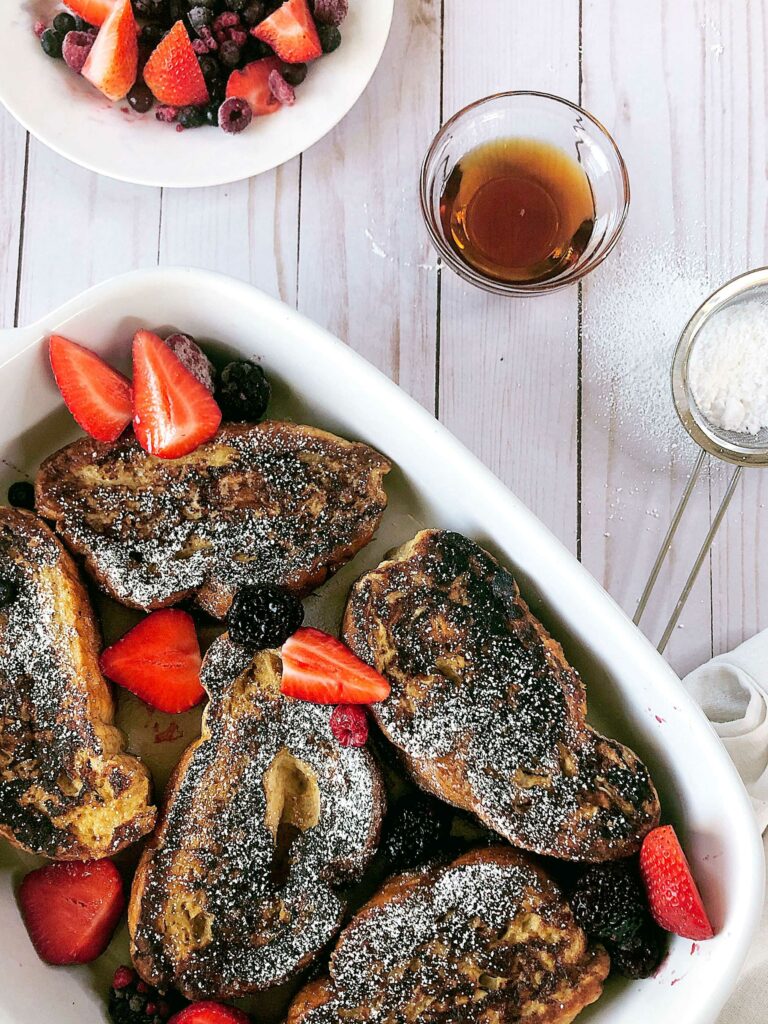
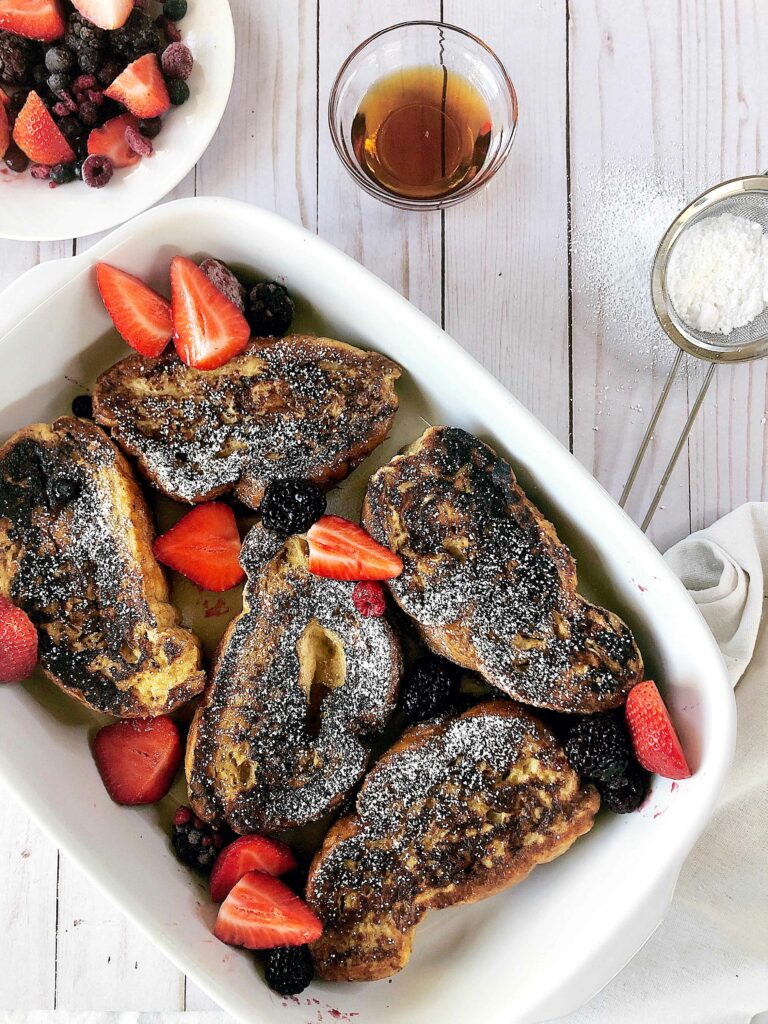
Vanilla rum french toast in a white baking dish with fresh strawberries, blueberries, and powdered sugar

Quick Answer

This vanilla rum french toast is made by soaking thick-sliced brioche or french bread in a custard of half-and-half, eggs, vanilla, cinnamon, nutmeg, and a splash of spiced rum, then cooking until deeply golden. It takes 20 minutes and tastes like the best thing you've ever had on a slow Saturday morning.

There is a version of Saturday morning that involves sunlight through the kitchen windows, no particular schedule, and something on the stove that makes the whole house smell like a good decision. This french toast is that thing. I've been making it since before Lovery existed, and it's the one recipe my family requests more than anything else in my rotation.

The rum is not optional. I know that sounds dramatic, but hear me out. It doesn't make the toast boozy or taste like a cocktail. What it does is deepen the custard in a way that vanilla alone can't. You get warmth and complexity without anything you'd describe as "alcoholic." Spiced rum like Sailor Jerry is my go-to, but coconut rum works beautifully if that's what you have. Either way, the result is french toast that tastes noticeably more interesting than the version you grew up with.

If you love weekend cooking projects with this same slow, intentional energy, my banana bread recipe is the other thing I make on a Saturday when I want the kitchen to smell incredible all morning.

The Recipe

Vanilla rum french toast

Serves 3–4 · 20 minutes · No special equipment

Prep time 5 min
Cook time 15 min
Total time 20 min
Servings 3–4

Ingredients

  • 6–8 slices french bread or brioche, slightly stale and cut thick (about ¾–1 inch)
  • ¾ cup half-and-half
  • 3 large eggs
  • 2 Tbsp granulated sugar
  • 1 Tbsp pure vanilla extract
  • 1 tsp cinnamon
  • ⅛ tsp nutmeg
  • 2 Tbsp spiced rum (Sailor Jerry is my pick — coconut rum also works)
  • Pinch of salt
  • Oil or butter for the pan
  • Powdered sugar and warm maple syrup, for serving

Instructions

  1. In a mixing bowl, whisk together the half-and-half, eggs, sugar, vanilla, cinnamon, nutmeg, rum, and salt until fully combined and uniform in color.
  2. Pour the custard into a shallow dish or baking pan wide enough to hold a slice of bread flat.
  3. Dip each bread slice into the custard, coating both sides. Place the coated slices onto a plate and let them soak for 5 minutes. Do not leave them sitting in the dish or they will get too soggy to cook properly.
  4. Heat a large skillet or griddle over medium-high heat. Add a thin layer of oil or a pat of butter and let it get hot.
  5. Add 2–3 slices to the pan, leaving space between each. Cook for 3–4 minutes without moving, until the underside is deeply golden. Flip and cook the other side for another 3 minutes.
  6. Remove from the pan, dust generously with powdered sugar, and serve hot with warm maple syrup and fresh fruit on the side.

What bread makes the best vanilla rum french toast?

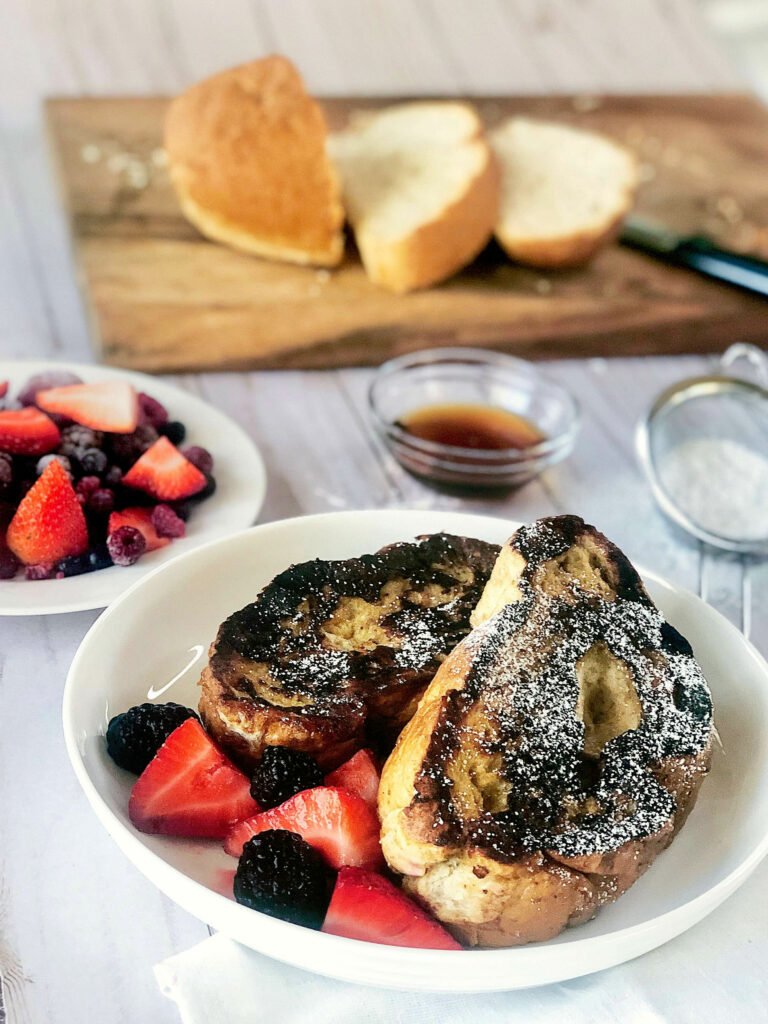
The bread is the most important decision in this recipe, and it's the one thing most people get wrong. Standard sandwich bread is too thin and too soft. It absorbs the custard too quickly, turns to mush in the pan, and falls apart when you try to flip it. You need something with structure.

My first choice is always brioche. It's rich, slightly sweet, and thick enough to hold up through a five-minute soak without losing its shape. The butter content in the dough also helps it develop a beautiful golden crust in the pan. If I can't find brioche, french bread is an excellent second option — slightly stale, sliced an inch thick. The stale part is important. Day-old bread absorbs the custard without becoming waterlogged, where fresh bread soaks through too fast and gets soggy in the center.

Other good options in order of preference: challah, Texas toast, and thick-sliced sourdough. Avoid thin-sliced sandwich bread entirely. It does not work here.

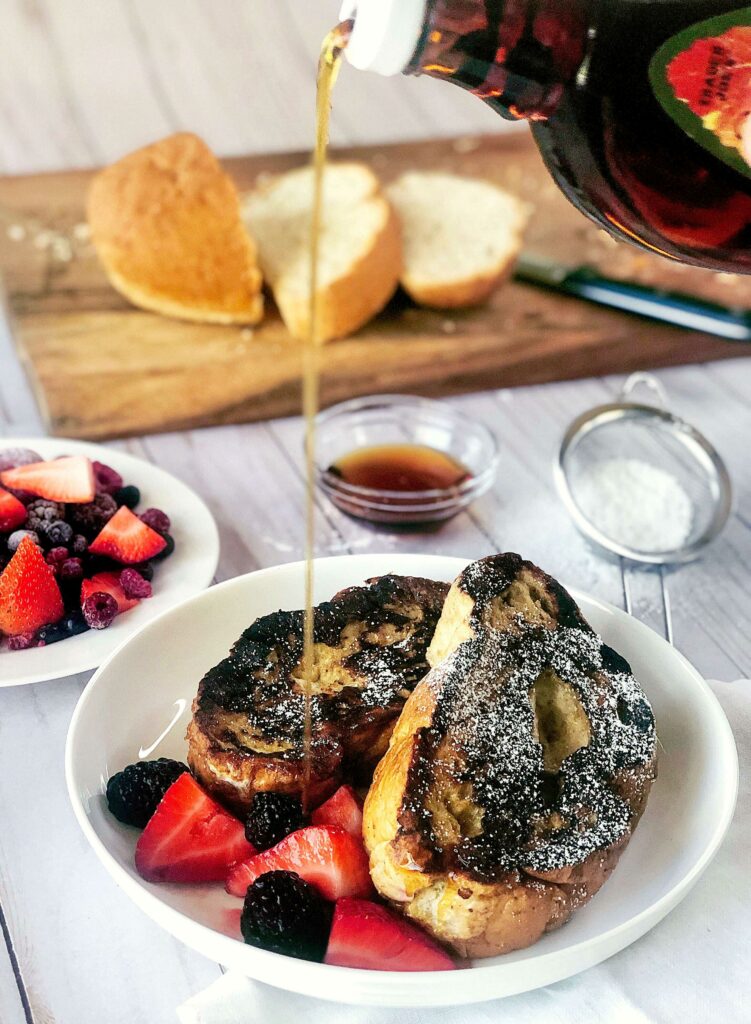
Maple syrup being poured over vanilla rum french toast on a white plate with fresh strawberries and blueberries
Real maple syrup only. The good stuff makes a noticeable difference here.

Does the rum actually make a difference?

Yes, and meaningfully so. The difference between this recipe and a standard french toast isn't the rum flavor itself — it's what the rum does to the overall custard. It adds warmth and depth that make you taste the vanilla differently. The cinnamon reads richer. The whole thing tastes more layered without tasting complicated.

I use spiced rum, specifically Sailor Jerry, because the warm spice notes in the rum align with the cinnamon and nutmeg already in the custard. They reinforce each other rather than competing. Coconut rum gives a slightly different result — a little sweeter, a little more tropical — which is also good, just different.

If you're skipping alcohol entirely, add an extra half-teaspoon of vanilla extract and a small pinch of allspice. It won't be exactly the same, but it will be better than a standard custard with vanilla alone.

Tips for getting it right every time

A few things that make the difference between good french toast and great french toast:

  • Use slightly stale bread. Fresh bread absorbs liquid too fast and gets soggy. Day-old is ideal. If you only have fresh, lay the slices out on a wire rack for 20 minutes before soaking.
  • Don't soak in the bowl. Coat both sides and pull the bread out onto a plate. Leaving it sitting in the custard makes the center wet and the outside fall apart when you flip it.
  • Get the pan hot before you add the bread. Medium-high heat. If the pan isn't hot enough, the bread steams instead of getting a crust. You want to hear a sizzle when the bread hits the pan.
  • Don't rush the flip. Three to four minutes on the first side. If you try to flip too early, the crust hasn't formed and the toast will stick. It releases cleanly when it's ready.
  • Use oil or butter, not cooking spray. Both oil and butter give you better color and flavor. Cooking spray produces a pale, uninteresting crust.
  • Serve immediately. French toast does not wait well. If you're making a big batch, keep finished slices in a 200°F oven on a baking sheet while you finish the rest.

How to serve vanilla rum french toast

I keep the topping simple because the custard does the work. Powdered sugar dusted generously over the top, real maple syrup (not pancake syrup), and a fruit salad on the side. My preference is a mix of yellow peaches, plums, strawberries, and blueberries when they're all in season at the same time. That combination has a natural tartness that cuts through the richness of the custard beautifully.

For a brunch situation where you're feeding more people, this recipe scales up easily. Make the custard in a larger bowl, slice a full loaf the night before, and work in batches with the oven holding finished slices warm. It's one of the best things to put on a brunch table because it travels from pan to plate quickly and everyone can eat at the same time.

If you're planning a bigger gathering, my backyard engagement party guide has a full brunch menu and setup approach that pairs well with a batch of this french toast as the centerpiece dish.

Can you make vanilla rum french toast ahead of time?

The custard, yes. The cooked toast, not really. Whisk together the half-and-half, eggs, sugar, vanilla, rum, and spices the night before and refrigerate it covered. In the morning, slice the bread, let both come to room temperature for about 15 minutes, then soak and cook. This is the version I make when we have guests staying over and I don't want to be standing at the stove measuring things while trying to make coffee and have a conversation at the same time.

Cooked french toast reheats in a 350°F oven for about 8 minutes and is acceptable but not as good as fresh. I wouldn't freeze it. The texture changes and it never fully recovers.

Shop the Kitchen

The mixing bowls, skillets, and kitchen tools I actually use every week.

Shop My Kitchen

Vanilla rum french toast FAQ

Can I make this recipe without alcohol?

Yes. Replace the 2 tablespoons of rum with an extra half-teaspoon of vanilla extract and a small pinch of allspice or cloves. The flavor won't be identical but the custard will still be noticeably better than a plain version. Rum extract is also an option if you want to get closer to the original flavor without the alcohol.

What is the best rum for french toast?

Spiced rum is the best choice because the warm spice notes reinforce the cinnamon and nutmeg already in the custard. Sailor Jerry is my preference. Coconut rum (Malibu) works well for a slightly sweeter, more tropical flavor. Dark rum adds a deeper molasses-y warmth. Light rum has the most neutral flavor of the options. All four work in this recipe.

Why is my french toast soggy in the middle?

Two likely causes. First, the bread may have soaked too long in the custard. Coat both sides and pull it onto a plate immediately rather than leaving it sitting in the bowl. Second, the pan may not have been hot enough. A pan that isn't fully heated before the bread goes in will steam the bread rather than sear it, leaving the center wet. Medium-high heat and a full preheat before adding the bread are both essential.

What is the best bread for french toast?

Brioche is the best choice for this recipe. It's thick, slightly enriched with butter, and holds up through the soak without falling apart. French bread that is slightly stale is an excellent second option. Challah and Texas toast also work well. Thin sandwich bread does not work — it absorbs too quickly and doesn't have enough structure to cook without falling apart.

Can I make the custard the night before?

Yes. The custard keeps well covered in the refrigerator overnight. Whisk all the liquid ingredients together, cover, and refrigerate. In the morning let it come to room temperature for about 15 minutes before soaking the bread. This is the approach I use when I'm making it for guests and want the morning to feel relaxed rather than rushed.

What do you serve with vanilla rum french toast?

Powdered sugar, real maple syrup, and a fruit salad are the classic combination. My preference for the fruit is yellow peaches, plums, strawberries, and blueberries when all four are in season. The tartness of the fruit cuts through the richness of the custard in a way that makes both taste better. For a full brunch spread, a pot of good coffee and some fresh juice round it out perfectly.

If you enjoy recipes with this level of intention, the roast chicken recipe is the weeknight version of the same philosophy — simple ingredients, one technique, results that feel far more impressive than the effort involved.

Liz Lovery, founder of Lovery

About the Author

Liz Lovery

Liz is the designer, renovator, and writer behind Lovery. She writes about homemaking, DIY, renovation, and hosting for people who want their home to feel intentional and genuinely lived-in. Every recipe has been tested in her real kitchen.